
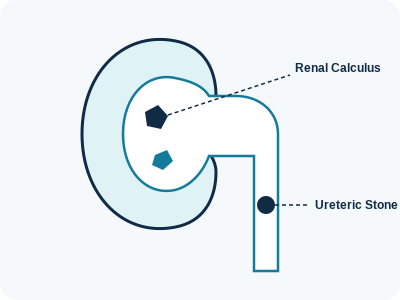
Overview of Kidney Stones (Renal Calculi)
Kidney stones are hard mineral and salt deposits that form inside the kidneys when urine becomes concentrated. They may remain silent inside the kidney or pass into the ureter, causing acute discomfort or urinary obstruction.

Symptoms and Warning Signs
- Sharp, wave-like pain (renal colic) in the flank, lower back, or radiating toward the groin and lower abdomen
- Visible or microscopic blood in the urine (hematuria)
- Nausea, vomiting, or urinary urgency and frequency when a stone nears the bladder
- Fever or chills alongside flank pain—which requires urgent medical assessment
Causes and Risk Factors
Dehydration, high dietary sodium or oxalate intake, family history of stone disease, metabolic imbalances, obesity, or recurrent urinary tract infections can increase stone formation risk.
Diagnostic Tests and Evaluation
Evaluation typically includes urine routine and microscopy, blood kidney function and electrolyte panels, renal ultrasound, and non-contrast CT KUB (kidneys, ureters, bladder) to map exact stone dimensions and density.
Available Treatment Approaches
Small stones may pass with hydration and expulsive medical therapy under specialist monitoring. Larger, obstructing, or symptomatic stones are addressed through endourological procedures such as RIRS, PCNL, or laser lithotripsy depending on anatomy and stone burden.
When to Consult a Urologist
Consult a urologist promptly for recurrent flank pain, blood in urine, stones larger than 4–5 mm, or any stone accompanied by fever or reduced urine output.
Self-care and practical tips
- Drink enough fluid through the day to keep urine pale yellow, unless you have been told to limit fluids.
- Limit excess salt and very high animal-protein intake.
- Keep a normal amount of dietary calcium, as restricting it can increase risk in some people.
- Strain urine if advised, and keep any stone passed for analysis.
Questions to ask at your consultation
- What is the size and position of my stone, and can I wait?
- Which procedure is most suitable for me and why?
- Should I have tests to find out why I form stones?
Frequently asked questions
Do all kidney stones require surgery?
No. Many small stones can be managed initially with hydration, symptom control, and medical expulsive therapy when there is no severe obstruction or infection.
Can kidney stones return after removal?
Recurrence is possible without preventive measures. Fluid intake adjustments, dietary guidance, and stone analysis help reduce future risk.
Discuss Kidney Stone Treatment with a specialist
Choose your preferred hospital and request a consultation. Your enquiry opens in WhatsApp and is sent only when you press Send.