Understanding Bladder Cancer
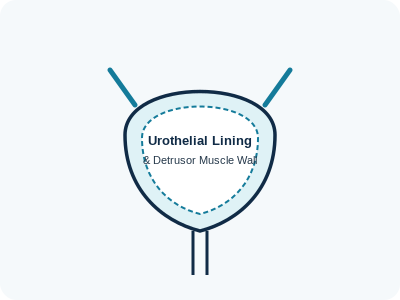
Bladder cancer most commonly begins in the urothelial cells lining the inside of the urinary bladder. Determining whether the tumour is confined to the inner lining or invades the muscle layer is critical to treatment planning.

Symptoms and Warning Signs
- Painless visible blood in the urine (gross hematuria), often intermittent
- Microscopic blood detected on urine testing
- Increased urinary frequency, urgency, or burning without infection
Causes and Risk Factors
Cigarette smoking is the leading modifiable risk factor. Occupational exposure to certain industrial aromatic amines/chemicals and chronic bladder irritation also contribute.
Diagnostic Tests and Evaluation
Workup includes urine cytology, renal/bladder ultrasound or CT urography, and office or operating-room cystoscopy to visualize the bladder lining directly.
Available Treatment Approaches
Transurethral resection of bladder tumour (TURBT) removes visible lesions and stages the tissue. Depending on pathology, options include intravesical instillation therapy, close surveillance, or robot-assisted radical cystectomy with urinary diversion.
When to Consult a Urologist
Blood in the urine should never be ignored—even if it appears once and clears on its own—and requires prompt urological evaluation.
Self-care and practical tips
- Stop smoking. It is the most important change you can make.
- Drink plenty of fluids unless advised otherwise.
- Attend every scheduled follow-up cystoscopy, even if you feel well.
- Tell your doctor about any workplace exposure to dyes or chemicals.
Questions to ask at your consultation
- How deep is the tumour, and what grade is it?
- Do I need medicine placed in the bladder after surgery?
- How often will I need cystoscopy?
Frequently asked questions
Why is cystoscopy important for suspected bladder conditions?
Cystoscopy allows direct visual inspection of the urethra and bladder lining and enables tissue sampling or tumour resection.
Discuss Bladder Cancer Treatment with a specialist
Choose your preferred hospital and request a consultation. Your enquiry opens in WhatsApp and is sent only when you press Send.