
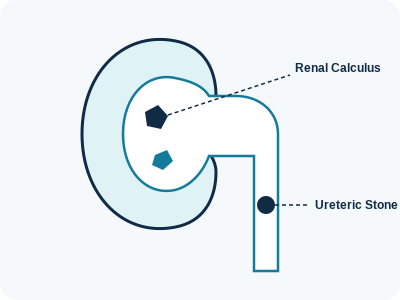
What Is RIRS (Retrograde Intrarenal Surgery)?
RIRS is a minimally invasive endoscopic procedure in which a thin, flexible scope is passed gently through the urethra and bladder into the ureter and kidney collecting system—without any external skin cut.

When RIRS Is Considered
- Selected renal stones typically up to around 1.5–2 cm (depending on anatomy and stone location)
- Lower-pole stones or multiple smaller stones where flexible scope access is advantageous
- Patients seeking no external flank incision
Diagnostic Tests and Evaluation
Preoperative CT KUB, urine culture, and blood investigations confirm stone position, exclude active infection, and plan safe endoscopic access.
How the Procedure Works
Under anaesthesia, the urologist visualizes the stone via high-definition optics and uses laser energy to dust or fragment the stone into tiny particles. A temporary ureteral stent may be placed depending on individual anatomy.
When to Consult a Urologist
If you have confirmed kidney stones causing pain or obstruction, consult a urologist to discuss whether RIRS or another procedure fits your stone profile.
Self-care and practical tips
- Follow instructions about stopping blood thinners and fasting before surgery.
- Drink plenty of fluids after the procedure unless told otherwise.
- Expect some blood in the urine and stent discomfort, and report severe pain or fever promptly.
- Attend the appointment to remove the stent on time.
Questions to ask at your consultation
- Will a stent be needed, and for how long?
- Is a second stage likely for my stone?
- What symptoms after surgery should make me call you?
Frequently asked questions
Does RIRS require a skin incision?
No. RIRS accesses the urinary tract naturally through the urethra without external abdominal or flank incisions.
Discuss RIRS Kidney Stone Surgery with a specialist
Choose your preferred hospital and request a consultation. Your enquiry opens in WhatsApp and is sent only when you press Send.