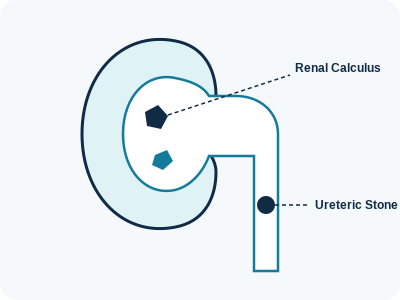

Role of Laser Energy in Stone Management
Laser lithotripsy uses controlled laser pulses delivered through a fine optical fibre during ureteroscopy or RIRS to fragment or dust urinary stones.

Symptoms That Prompt Evaluation
Severe flank or abdominal pain, blood in urine, or recurrent urinary tract infections associated with a known stone warrant specialist evaluation.
Diagnostic Tests and Evaluation
Imaging such as CT KUB or ultrasound identifies stone size, location, and whether urine drainage from the kidney is obstructed.
Treatment Approach
The urologist targets the stone directly under vision, breaking it into smaller pieces so fragments can clear or be retrieved safely while protecting surrounding tissue.
When to Consult a Urologist
Seek timely urological review if you experience persistent stone pain, fever, or difficulty passing urine.
Self-care and practical tips
- Ask about stopping blood-thinning tablets before surgery.
- Keep well hydrated after the operation.
- Keep follow-up appointments, including stent removal.
- Discuss prevention to lower the risk of new stones.
Questions to ask at your consultation
- Will the stone be dusted or removed in pieces?
- What are the specific risks in my case?
- How long will I have urinary symptoms afterwards?
Frequently asked questions
Can laser lithotripsy treat both kidney and ureteric stones?
Yes, laser fibres can be used endoscopically in both the ureter and the kidney depending on stone size and access.
Discuss Laser Kidney Stone Surgery with a specialist
Choose your preferred hospital and request a consultation. Your enquiry opens in WhatsApp and is sent only when you press Send.