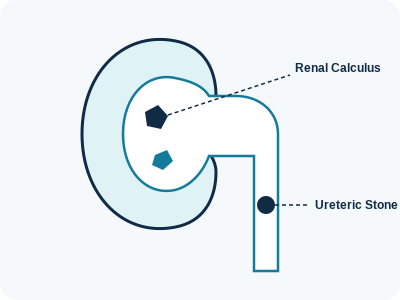
Kidney stones can range from tiny crystals that pass unnoticed to larger calculi that irritate the lining of the urinary tract or temporarily block urine flow.

Common Symptoms of a Moving Stone
When a stone shifts from the kidney into the ureter, patients often experience sudden, sharp pain on one side of the lower back or flank that may shift downward toward the groin. Urinary frequency, urgency, nausea, or pink/reddish urine may also occur.
Red-Flag Symptoms Requiring Prompt Care
Seek immediate medical evaluation if stone pain is accompanied by fever, chills, persistent vomiting, inability to pass urine, or severe pain that does not ease. Infection behind an obstructed kidney requires urgent attention.
Next Steps & Related Reading
Learn more on our Kidney Stone Treatment and Ureteric Stone Treatment pages.
Warning signs that need urgent care
Some stone symptoms mean the kidney may be blocked and infected, which needs prompt treatment. Please go to the nearest emergency department if you notice any of the following.
- Fever, shivering or chills together with flank pain
- Vomiting that stops you keeping fluids down
- Pain that is not controlled by the medicines you were given
- Passing very little or no urine
- Stone pain in a person with a single kidney or a kidney transplant
What happens at your consultation
Your urologist will ask about the pattern of pain, earlier stones and your general health, then review urine and blood tests. A non-contrast CT scan of the kidneys, ureters and bladder is the most accurate way to see the size and position of a stone. Ultrasound is often used for follow-up and in pregnancy.
The size and position of the stone, whether it is blocking the kidney and whether there is infection together decide whether it is safe to wait or whether a procedure is advised.
Reducing the chance of another stone
- Drink enough fluid through the day to keep your urine pale
- Limit added salt and very salty packaged foods
- Keep a normal amount of calcium in your diet unless advised otherwise
- Ask whether stone analysis or 24-hour urine tests are useful for you
Have a question about your symptoms?
Choose your preferred hospital and request a consultation. Your enquiry opens in WhatsApp and is sent only when you press Send.